ÖSD Certificate A1: The Ugly Truth About ÖSD Certificate A1
Comprehending the ÖSD Certificate A1: What You Required to Know In a significantly interconnected world, the ability to communicate in multiple languages has ended up being an important asset. For people aiming to show their efficiency in the German language, the Austrian Language Diploma (ÖSD) offers a structured and recognized certification program. Amongst the different levels of this accreditation, the ÖSD Certificate A1 acts as the entry point for newbies. This post explores the credentials of the ÖSD A1 accreditation, its function, structure, and significance, along with answers to some frequently asked questions. What is the ÖSD Certificate A1? The ÖSD Certificate A1 is a fundamental language efficiency test developed to measure a prospect's capability to communicate in fundamental German. It falls under the Common European Framework of Reference for Languages (CEFR), which offers a standardized scale for assessing language proficiency. The A1 level is categorized as the starting phase, where people are anticipated to comprehend and use familiar daily expressions and fundamental phrases aimed at pleasing practical requirements. Value of the ÖSD Certificate A1 The ÖSD Certificate A1 has a number of essential implications for people looking to enhance their language skills and improve their individual and expert prospects. Here are a couple of reasons that this certification is substantial: Foundation of Language Learning: The A1 level acts as a stepping stone for learners who wish to advance to greater levels of proficiency in German. Global Recognition: The ÖSD certificates are commonly recognized in Austria and Germany, increasing employability in German-speaking nations and strengthening visa applications. Evaluation of Basic Skills: The exam examines necessary abilities in reading, writing, listening, and speaking, offering learners a clear understanding of their linguistic ability. Structured Learning Path: Obtaining the A1 certificate sets the groundwork for students to methodically build their language skills. Structure of the ÖSD Certificate A1 The ÖSD Certificate A1 consists of 4 main components that assess various language skills: Listening Comprehension (Hörverstehen):. 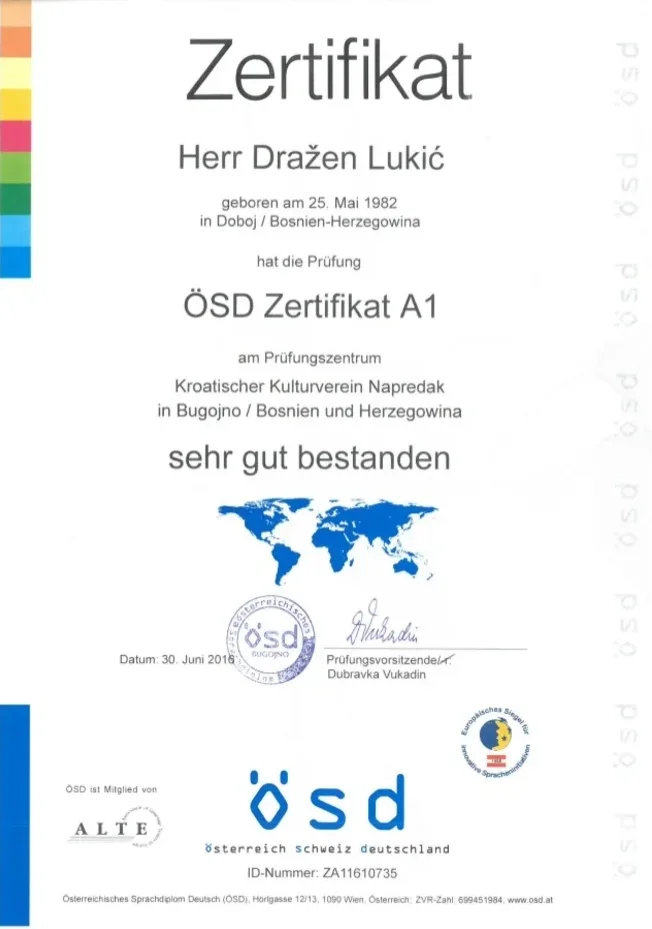 Candidates listen to tape-recorded discussions and brief texts. They should respond to questions that examine their understanding and ability to extract necessary info. Reading Comprehension (Leseverstehen):. This sector consists of reading brief texts, discussions, or ads, followed by concerns that check understanding and interpretation. Written Expression (Schreiben):. In this part, students should produce brief composed texts, such as filling out kinds or writing basic messages, showing their ability to communicate in composing. Oral Expression (Sprechen):. Prospects participate in a discussion with an inspector, which can include answering concerns about personal subjects, describing familiar items, or going over daily situations. Getting ready for the ÖSD Certificate A1. sprachschule österreich in the ÖSD A1 assessment needs sufficient preparation. Here are some ideas for reliable research study:. Research Study Materials: Utilize ÖSD-approved books, online courses, and practice tests specifically created for the A1 level. Expand Vocabulary: Focus on vocabulary associated to everyday subjects such as family, jobs, foods, and hobbies. Practice Listening: Engage with German-speaking media, consisting of podcasts, films, and tunes, to enhance listening skills. Discussion Practice: Join language exchange programs or groups to practice speaking with native speakers or fellow learners. Mock Tests: Regularly complete practice tests to familiarize oneself with the exam format and time restrictions. Benefits of Earning the ÖSD Certificate A1. Accomplishing the ÖSD A1 certificate not just confirms one's language abilities however likewise unlocks numerous chances for individual and expert development. Here are some advantages of holding this certification:. Boosted Job Opportunities: Many employers in German-speaking countries worth language certification, especially at the A1 level, as it shows commitment to interaction. Admission to Language Courses: Some language schools require proof of A1 proficiency as a requirement for advancing to higher courses. Confidence in Communication: The certificate enhances self-confidence in fundamental interaction, a vital ability for living or operating in a German-speaking environment. Cultural Immersion: Learning the language welcomes much deeper cultural understanding, making it possible for people to connect more meaningfully with German-speaking neighborhoods. Frequently asked question Section. 1. Who is qualified to take the ÖSD Certificate A1 exam? The exam is open to people over the age of 16 who want to show their fundamental knowledge of German. No prior credentials are required. 2. What is the passing rating for the ÖSD A1 exam? sprachzertifikat b1 need to achieve at least 60% of the overall points to pass the evaluation. 3. Where can I take the ÖSD A1 exam? The ÖSD A1 exam is used in various examination centers all over the world, particularly in Austria and Germany. It is advisable to check the ÖSD site for the nearest area. 4. For how long is the ÖSD A1 certificate valid? The ÖSD Certificate A1 does not expire, and students can present it anytime to show their efficiency. 5. Can I prepare for the exam on my own? Yes, many prospects effectively prepare independently utilizing study products, however going to classes or language workshops can assist in much faster finding out. Conclusion. The ÖSD Certificate A1 functions as a crucial tool for those starting their journey to find out the German language. With its structured technique and acknowledgment in German-speaking regions, this certification leads the way for improved communication abilities, enhanced employment potential customers, and a deeper understanding of German culture. By investing time in preparation and practice, learners can attain this foundational milestone and set the phase for continued language advancement.